Meal Planning for One: A Weekday Plan and Free Worksheet
Plan five dinners and two lunches without cooking seven separate meals. Includes a portion ledger, ingredient overlap and a free printable worksheet.
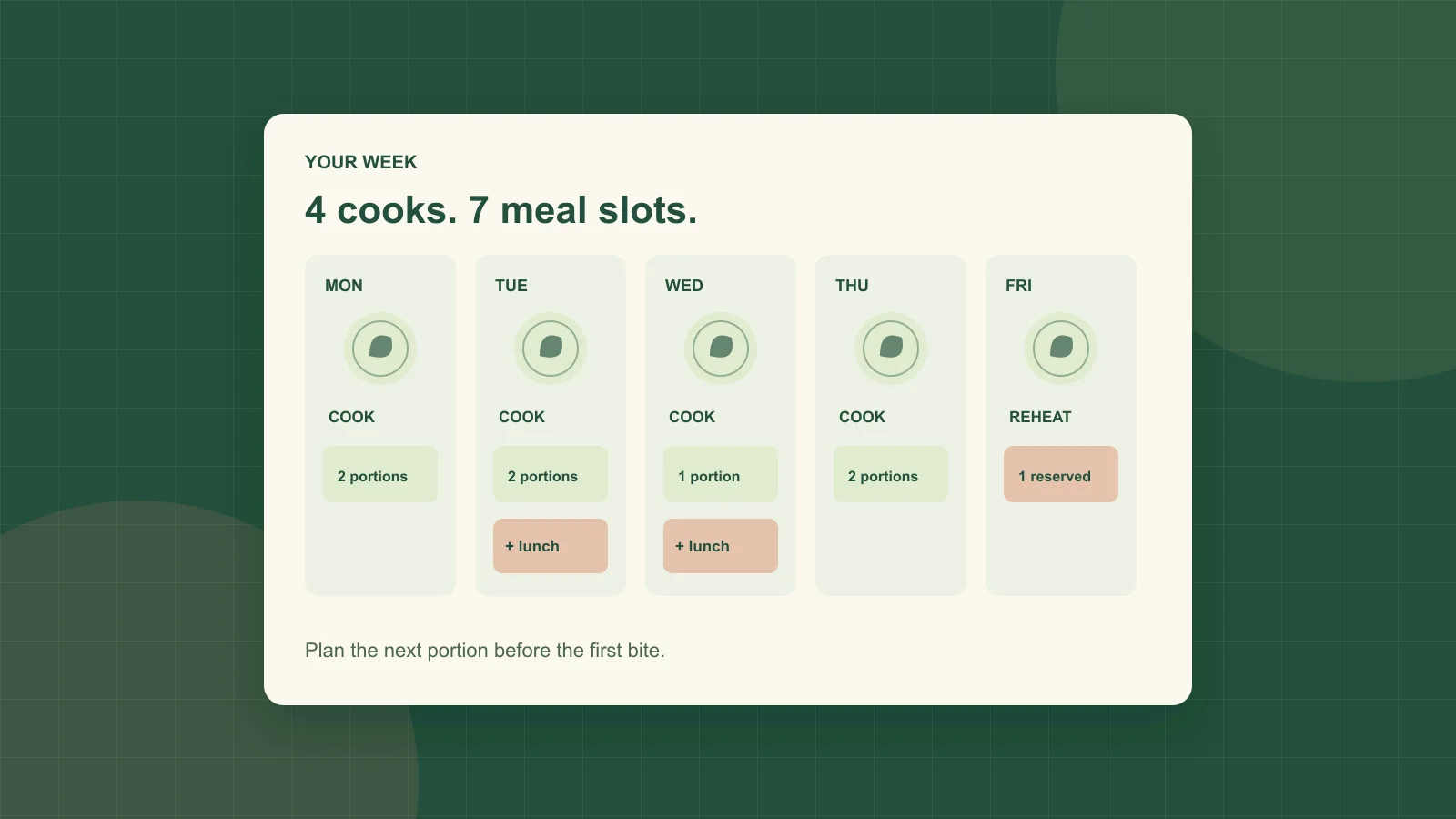
To meal plan for one, count the meals you will actually eat at home, decide which meals can share a cooking session, and give every opened perishable ingredient a second use. A recipe that serves four is only convenient if you have a plan for all four portions.
This guide works through five weekday dinners and two lunches using four cooking sessions. It is an illustrative planning example, not a tested recipe collection or a complete daily eating plan. Adjust the quantities, sides, breakfasts, other lunches and snacks to your appetite and needs.
Start with seven meal slots, not seven recipes
Write the days and meals you need to cover. Cross out evenings away, supplied work lunches and any other meals already arranged. In this example, there are five dinners plus Tuesday and Wednesday lunch: seven portions in total. Breakfasts and the remaining lunches belong on a separate part of your list.
Then decide how much repetition you will enjoy. Someone happy with a repeated lunch can make two portions at dinner. Someone who dislikes reheated meals can cook smaller amounts and reuse the same uncooked vegetables in a different dish. Both approaches can work; the plan should reflect which one you will follow.
Christine Hradek's Iowa State University Extension guide to meal planning for one describes this practical problem from her own solo cooking experience: package sizes and the desire to avoid cooking every night shape the plan. Her approach includes straightforward meals and preparing ahead. The worksheet below turns those decisions into a visible portion count.
A five-dinner example with two planned lunches
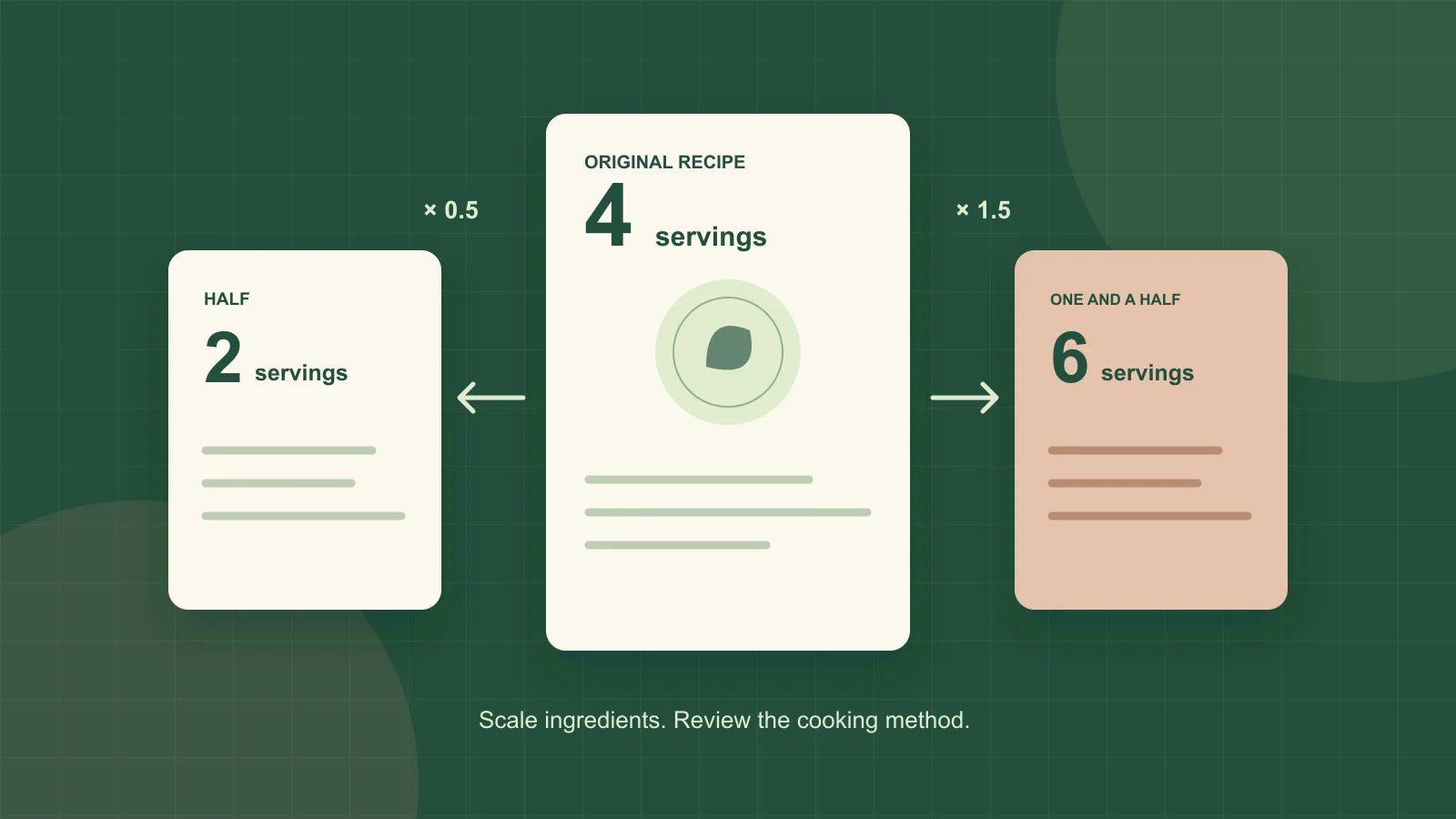
The meals below are suggestions for arranging recipes you already know. Choose a complete recipe for each dish, check its yield, and use our recipe scaling guide to set the quantities. Make the second portion deliberately; do not rely on whatever happens to be left after dinner.
| Meal | What to eat | Portion decision |
|---|---|---|
| Monday dinner | Spinach and pea pasta | Cook 2 portions; reserve Tuesday's lunch |
| Tuesday lunch | Monday's pasta | Use the reserved portion |
| Tuesday dinner | Chickpea, tomato and pepper skillet | Cook 2 portions; reserve Wednesday's lunch |
| Wednesday lunch | Tuesday's chickpea skillet | Use the reserved portion |
| Wednesday dinner | Spinach omelette with toast | Cook 1 portion |
| Thursday dinner | Tofu and vegetable rice bowl | Cook 2 portions; reserve Friday's dinner |
| Friday dinner | Thursday's rice bowl | Use the reserved portion |
The arithmetic is 2 + 2 + 1 + 2 = 7 portions. There is no unassigned extra meal hiding in the fridge, and Friday does not require a fifth cooking session. If Friday's plans change, review Thursday's batch before cooking it: make one portion or freeze the extra promptly using suitable storage guidance.
Give each ingredient a job before buying it
A short overlap table makes pack sizes easier to judge. These are illustrative recipe allocations, so replace them with your chosen recipes' quantities. A 300 g spinach purchase only makes sense here because all 300 g has a planned destination.
| Ingredient | Total needed | Where it goes |
|---|---|---|
| Spinach | 300 g | 100 g pasta; 100 g omelette; 100 g rice bowls |
| Peppers / capsicums | 3 | 2 in the chickpea skillet; 1 in the rice bowls |
| Onions | 2 | 1 in the chickpea skillet; 1 in the rice bowls |
| Frozen peas | 200 g | 100 g pasta; 100 g rice bowls |
| Dry pasta | 150 g | Monday's two pasta portions |
| Dry rice | 150 g | Thursday's two rice bowls |
| Chickpeas | 480 g drained | Tuesday's two skillet portions |
| Chopped tomatoes | 400 g | Tuesday's skillet |
| Firm tofu | 300 g | Thursday's rice bowls |
| Eggs and bread | 2 eggs; 2 slices | Wednesday's omelette and toast |
Add the oil, sauce, seasonings and any extra sides your recipes require. Check tin labels for drained weight rather than assuming two tins always provide the same quantity. Keep dry rice and cooked rice separate in your records. For this example, rice is measured dry before Thursday's cooking session.
Now subtract usable stock. If you already have 200 g dry pasta, your shopping list needs no pasta for the 150 g allocation. If the spinach on hand will not remain suitable until Thursday, change the order, choose a suitable frozen alternative, or purchase less fresh spinach. A spreadsheet cannot judge the food's condition or override its label.
Keep cooked leftovers separate from ingredient reuse
Buying spinach on Monday for several dishes does not mean cooking all of it on Monday. This example cooks ingredients on the day shown. That distinction prevents a flexible ingredient plan from quietly becoming a week of refrigerated cooked food.
The NSW Food Authority's leftover guidance says to refrigerate or freeze leftovers within two hours, keep them below 5°C, and eat refrigerated leftovers within three days. It gives a shorter two-day limit for cooked rice and pasta. The next-day meals in the example still depend on correct cooling, storage and reheating; a calendar entry does not make mishandled food safe.
Put the intended meal and preparation date on the container. If you will freeze a portion, add it to your freezer meal rotation instead of leaving it as an unnamed backup. Follow the food's instructions and relevant local guidance if you are planning outside Australia.
Download the worksheet and make it fit your week
Download the free meal-planning worksheet PDF, open the printable browser version, or use the editable meal-slot CSV. The printable includes the worked example, a blank planner and a shopping table. You can also use your browser's Print command to print or save the browser version as PDF.
- Write only the meals you need to cover, then count the portions.
- Allocate the portions each cooking session will make.
- Write a destination for every extra portion.
- Total the ingredients, check stock and list only the shortfall.
- After the week, note which portion sizes and repeat meals actually suited you.
If the first plan is too much work, remove a cooking session and use a familiar convenience meal. If it produces too much repetition, keep the ingredient overlap and cook single portions. If the grocery bill is the problem, use the budget meal-planning guide to compare pack size, usable quantity and price.
Share this insight
Kivella Editorial Team
Kivella's editorial team documents practical pantry, recipe, meal-planning and nutrition workflows. Material claims are checked against primary research or official guidance, and product claims are kept within Kivella's current documented capabilities.
Read our editorial policyShare Article
On this page
Tags
Continue the workflow
Related Kivella guides
Recipe organization
How to Scale a Recipe and Buy the Right Quantities
Convert recipe servings with a simple formula, check units and cooking limits, then subtract pantry stock. Includes examples and a free scaling worksheet.
Meal planning
Budget Meal Planning: Shop Your Pantry Before the Store
Build a budget meal plan from food you own. Use a worked three-dinner example, compare pack costs and unit prices, and track what you actually spend.
Meal preparation
Freezer-Friendly Meals: A Safe Make-Ahead Dinner Guide
Choose meals that freeze well, cool and portion them safely, label every pack and reheat only what your household will use.