Pantry Staples List: Free Kitchen Essentials Checklist
A pantry staples list in ten categories, a 15-item starter pantry and a free printable checklist with have, low and buy boxes to tick before you shop.
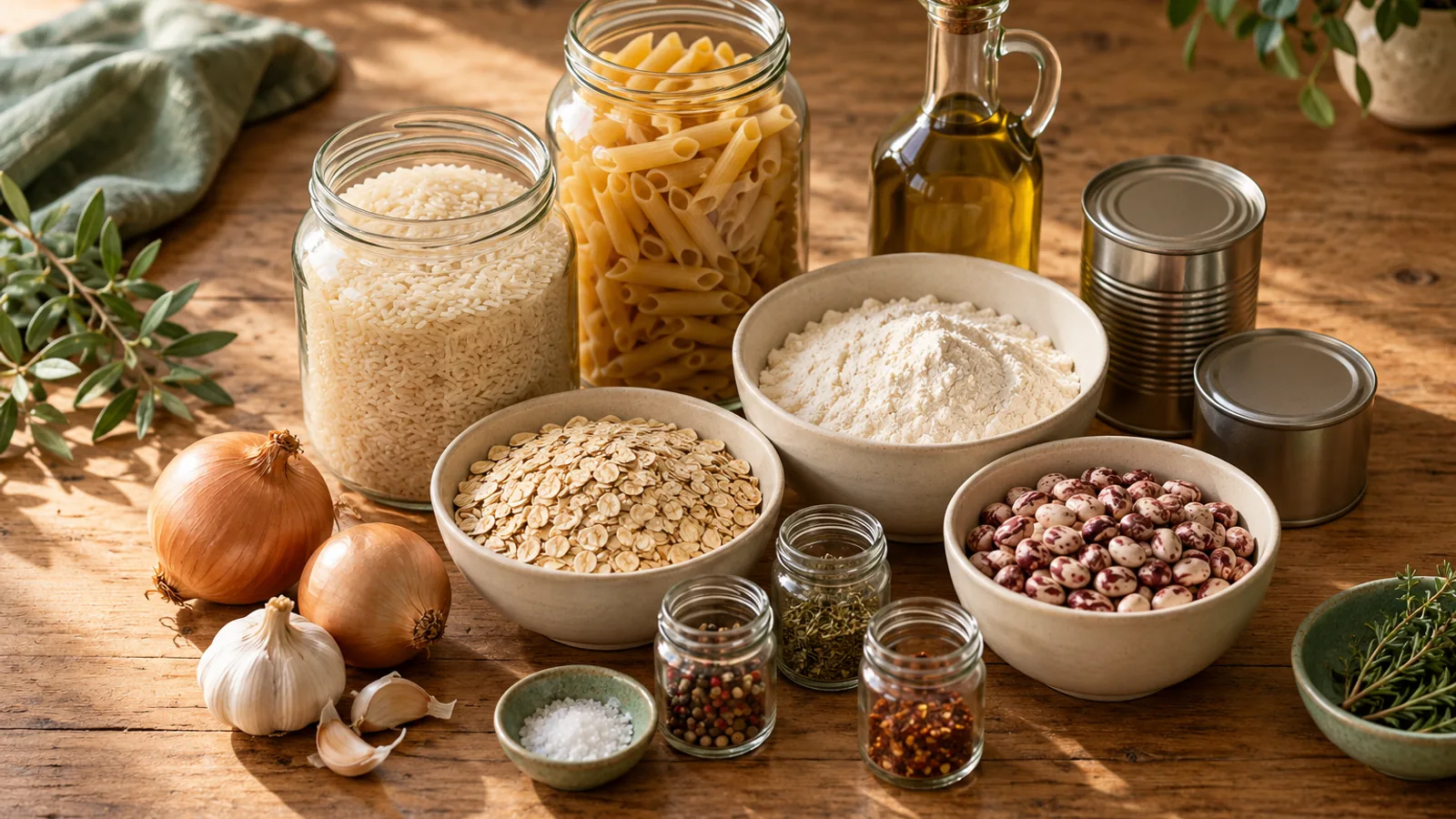
A pantry staples list covers the long-keeping basics that let you cook a meal without a special shopping trip: rice, pasta, flour, tinned (canned) tomatoes and beans, oil, vinegar, a few sauces, salt, pepper and spices. Add fridge, freezer and fresh basics such as eggs, frozen peas, onions, garlic and potatoes, then cross out anything you never use.
Free printable: download the pantry staples checklist (PDF) or open the printable browser version. It groups 84 staples into ten categories, gives each one a have, low and buy tick box, and leaves space for your own extras. It prints on two A4 or US Letter pages, and you don't need an account or an email address.
The complete pantry staples list, by category
These ten groups match the printable. Treat them as a menu of kitchen staples, not a shopping order. Buy what you will use while it is at its best, and skip anything that only appears in a recipe you rarely cook.
Baking and grains
- Plain flour (all-purpose flour) and self-raising flour
- White sugar and brown sugar
- Baking powder and bicarbonate of soda (baking soda)
- Cornflour (cornstarch) for thickening
- Vanilla extract and cocoa powder
- Couscous, quinoa or bulgur wheat
- Dried breadcrumbs
Pasta, rice and noodles
- One long pasta shape, such as spaghetti, and one short shape, such as penne
- Long-grain or basmati rice, plus a second rice you cook often: jasmine, brown or risotto
- Egg noodles or rice noodles, and instant noodles
- Lasagne sheets, if lasagne is a regular
Tins and jars
- Chopped or whole tomatoes, tomato paste and passata or a pasta sauce
- Chickpeas, lentils and beans: kidney, black, cannellini or baked beans
- Tuna or salmon
- Coconut milk and sweetcorn
- Stock cubes, powder or cartons
An opened tin stops being a pantry item. The UK Food Standards Agency advises against storing food in an opened tin. Empty any leftovers into a storage container, cover it and refrigerate it.
Oils, vinegars and sauces
- A neutral cooking oil (vegetable, canola or sunflower) and olive oil
- White or cider vinegar, plus balsamic or red wine vinegar
- Soy sauce and Worcestershire sauce
- Mustard, mayonnaise and tomato ketchup (tomato sauce in Australia)
- A hot sauce or sweet chilli sauce
Read the label once a bottle is open. Australia's Food Safety Information Council notes that some sauces and jams people used to keep in the pantry now need refrigerating because they contain less sugar or salt.
Herbs, spices and seasonings
- Salt and black pepper
- Dried oregano or a mixed-herb blend, and bay leaves
- Ground cumin, paprika (sweet or smoked) and ground cinnamon
- Chilli flakes or chilli powder
- Curry powder or a curry paste you like
- Garlic powder
Breakfast
- Rolled oats (porridge oats)
- Breakfast cereal or muesli
- Bread or wraps
- Peanut butter or another spread
- Jam, honey or maple syrup
- Tea and coffee
- Long-life (UHT) milk or a shelf-stable plant drink
Snacks
- Crackers or rice cakes
- Nuts, seeds and dried fruit
- Popcorn kernels
- Crisps (chips) and biscuits (cookies)
- Muesli or granola bars
Fridge basics
- Milk or a plant-based drink
- Butter or spread
- Eggs
- Cheese and plain yoghurt
- Opened jars and sauces whose labels say to refrigerate
Freezer basics
- Peas, mixed vegetables and spinach
- Berries or other frozen fruit
- Sliced bread
- Mince (ground meat) or a plant-based alternative
- Chicken pieces or fish fillets
- Leftover portions, labelled and dated
The Food Standards Agency recommends keeping a home freezer at around -18°C and labelling what you freeze, so you know what each container holds and when it went in.
Fresh basics that keep
- Onions and garlic
- Potatoes and sweet potatoes
- Carrots
- Lemons or limes
- Apples
- Fresh ginger
Storage advice differs by item. The Food Safety Information Council says potatoes do best in a cool, dry cupboard and advises against eating potatoes that have started to sprout. For other produce, check the label, your retailer's advice or the USDA FoodKeeper guidance.
A starter pantry on a budget: 15 staples
Stocking a first kitchen or keeping spending tight? Your pantry staples list can start small. These 15 staples give you a base, some flavour and a backup meal or two: pasta with tomato sauce, fried rice with frozen peas, or a lentil and tomato soup.
- Rice
- Dried pasta
- Rolled oats
- Plain (all-purpose) flour
- Tinned tomatoes
- Tinned beans or chickpeas
- Dried or tinned lentils
- Stock cubes or powder
- A neutral cooking oil
- Salt and black pepper
- Soy sauce
- One spice you will use often, such as ground cumin or mixed dried herbs
- Onions
- Garlic
- Frozen peas or mixed vegetables
Spread the purchases over a few shops rather than buying everything at once. Compare the unit price on the shelf label where one is shown, but choose a pack size you will finish while it is still good. A large bag only helps if you use it.
Tailor your pantry essentials list to your household
Cooking for one
Buy smaller packs of fresh basics and lean on the freezer. The Food Safety Information Council notes that sliced bread can be frozen and used a slice at a time, and frozen vegetables let you cook one portion at a time. Our meal planning for one guide shows how to give every portion a destination.
Families
Breakfast, lunchbox and snack staples usually run down fastest, so watch those for the low column. Larger packs make sense for items you finish well before their best-before date. Agree that whoever opens the last packet adds it to the shared list.
Vegetarian and plant-based kitchens
Expand the tins, grains and freezer groups: several kinds of beans, lentils and chickpeas, tofu or tempeh in the fridge, nuts and seeds, vegetable stock and a plant-based milk. Swap the meat and fish in the freezer for plant-based mince, frozen edamame or extra vegetables.
Keen bakers
Add bread flour, caster sugar (superfine sugar), icing sugar (powdered sugar), dried yeast, chocolate, extra butter and eggs. Check the dates on raising agents and yeast before a big bake.
How to keep your pantry staples stocked
A list only helps if it matches what is on the shelf. Four habits keep it up to date.
- Check before you shop. Run through the checklist, tick have, low or buy, and copy only the low and buy items to your shopping list.
- Use first in, first out. Put new purchases behind older ones. Food Standards Australia New Zealand recommends rotating pantry food by using older stock first, and storing tins in a cool, dry place when the label gives no other instructions.
- Note the dates that matter. In Australia, New Zealand and the UK, a use-by date is about safety and a best-before date is about quality. In the US, the USDA says most date labels describe quality, with infant formula the exception. Either way, the date assumes the food is stored as the label says. When something is close to its date, our guide to using expiring ingredients helps you plan a meal around it.
- Check tins for damage. The FDA and the Food Safety Information Council advise throwing away cans that are swollen, leaking, rusted or badly dented.
For a spreadsheet record of quantities and dates, download the free CSV template in our pantry inventory system guide. To keep the list on your phone instead, use Kivella's pantry inventory app for iPhone and Android. You can add staples by hand or scan a barcode or receipt (scans count towards your plan's allowance). Set an expiry date for each item and get a reminder when food is close to its date. Each recipe then shows which ingredients you have, have only part of, or are missing.
Pantry staple names in the UK, Australia, the US and Canada
Recipes and shop labels use different names for the same staple. On your own list, use whatever your local shop calls it.
| UK, Australia and New Zealand | US and Canada |
|---|---|
| Plain flour | All-purpose flour |
| Self-raising flour | Self-rising flour |
| Bicarbonate of soda (bicarb soda) | Baking soda |
| Cornflour | Cornstarch |
| Caster sugar | Superfine sugar |
| Icing sugar | Powdered or confectioners' sugar (icing sugar in Canada) |
| Tinned tomatoes | Canned tomatoes |
| Tomato purée (UK), tomato paste (Australia) | Tomato paste (US tomato purée is a thinner product) |
| Stock cubes | Bouillon cubes |
| Mince | Ground beef or ground meat |
| Coriander (the leaves) | Cilantro |
| Spring onions | Green onions or scallions |
| Crisps (UK), chips (Australia) | Chips |
| Biscuits | Cookies (sweet) or crackers (savoury) |
Frequently asked questions
What are the basic pantry staples?
The basic pantry staples are rice, pasta and oats, flour, tinned tomatoes, tinned or dried beans and lentils, stock, cooking oil, vinegar, soy sauce, salt, pepper and two or three spices. Most households add onions, garlic and potatoes, plus eggs, milk and frozen vegetables, to turn those basics into complete meals.
What should every pantry have?
Every pantry should have the ingredients for three or four meals you already know how to cook, plus the seasonings those meals rely on. That might be pasta, tinned tomatoes and garlic for a quick sauce, or rice, eggs, frozen peas and soy sauce for fried rice. Staples you actually use matter more than a long generic list.
How do I stock a pantry for the first time?
Start with the 15-item starter list above rather than a full pantry staples list, and build up over several shops. Each week, add the pantry items your planned recipes need and that you expect to use again. After a month or so, drop anything you didn't touch, then print the checklist to keep the rest topped up.
What pantry staples last the longest?
Unopened tinned foods are among the longest-keeping staples. USDA FSIS says high-acid canned foods, such as tomatoes and fruit, keep their best quality for 12 to 18 months. Low-acid canned foods, such as meat and vegetables, keep for two to five years. For dry goods and everything else, check the label and the FoodKeeper guidance.
How often should I check my pantry?
Check the staples you use most before every shop, then do a fuller shelf-by-shelf check every few months to clear out stale, damaged or forgotten items. Australia's Food Safety Information Council suggests spring as a good time to clean out the pantry, fridge and freezer and to rotate older food to the front.
Sources
All sources retrieved 5 October 2026.
- USDA Food Safety and Inspection Service: Food Product Dating: US date labels, canned-food quality periods and damaged cans.
- FoodSafety.gov: FoodKeeper App: storage guidance for individual foods.
- US Food and Drug Administration: Are You Storing Food Safely?: checking canned goods for damage.
- Food Standards Agency: How to chill, freeze and defrost food safely: opened tins, freezer temperature and labelling frozen food.
- GOV.UK: Best before and use-by dates: UK date labels on dried, tinned and frozen foods.
- Food Standards Australia New Zealand: Use-by and best-before dates: date labels in Australia and New Zealand.
- Food Standards Australia New Zealand: Canned foods, purchasing and storing: cool, dry storage and using older stock first.
- Food Safety Information Council: Food storage, pantry, fridge or freezer: sauces and jams, potatoes and freezing sliced bread.
- Food Safety Information Council: It's time to spring clean your pantry, fridge and freezer: rotating food, damaged cans and a seasonal check.
Share this insight
Kivella Editorial Team
Kivella's editorial team documents practical pantry, recipe, meal-planning and nutrition workflows. Material claims are checked against primary research or official guidance, and product claims are kept within Kivella's current documented capabilities.
Read our editorial policyShare Article
On this page
Tags
Continue the workflow
Related Kivella guides

Pantry management
Pantry Inventory Template: Free List and Setup Guide
Download a free pantry inventory template (CSV), then set up one list for cupboard, fridge and freezer food with a worked example and a weekly routine.
Food waste
How to Use Expiring Ingredients Before They Become Food Waste
Turn date visibility into a safe, practical dinner decision by checking the food, choosing a flexible recipe and planning only the missing ingredients.
Pantry management
Best Pantry Inventory Apps in 2026: 7 Options Compared
The best pantry inventory apps compared: barcode and receipt scanning, expiry reminders, fridge and freezer lists, sharing, platforms and prices.